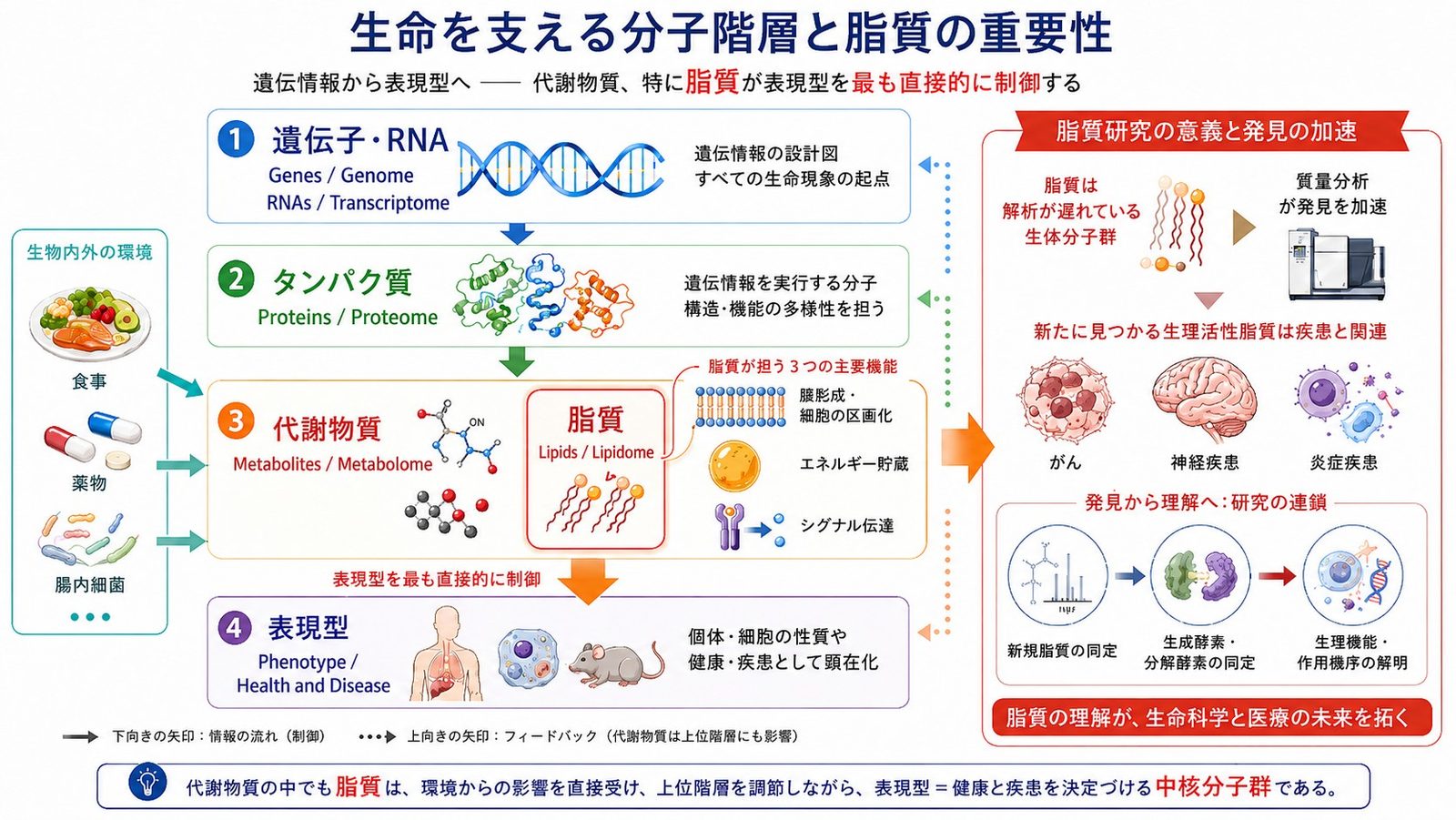
The substances that form living organisms and support their activities can be organized into three broad tiers. From the top of the information flow: genes – proteins – . sit at the position that most directly controls the state of an organism (its phenotype). They vary in quantity and quality under the influence of genes and proteins, are also supplied through diet, drugs, and symbionts such as gut bacteria, and are shaped by the environment inside and outside the organism.
“Lipids” is a general term for water-insoluble used to compartmentalize cells through membrane formation, to store energy, and for signal transduction inside and outside the cell. Partly because their analytical methods are less standardized than those for genes and proteins, lipids can be considered a relatively understudied class of biomolecules. For that very reason, we believe they are a research subject that holds much undiscovered knowledge for revealing new principles of life and for overcoming disease. Indeed, advances in mass spectrometry have recently led to a succession of newly identified bioactive lipids. In our laboratory, too, we have identified structurally novel lipids that change in cancer, neurological diseases, and inflammatory diseases, and we are working to identify their synthesizing and degrading enzymes and to analyze their physiological functions and mechanisms of action.