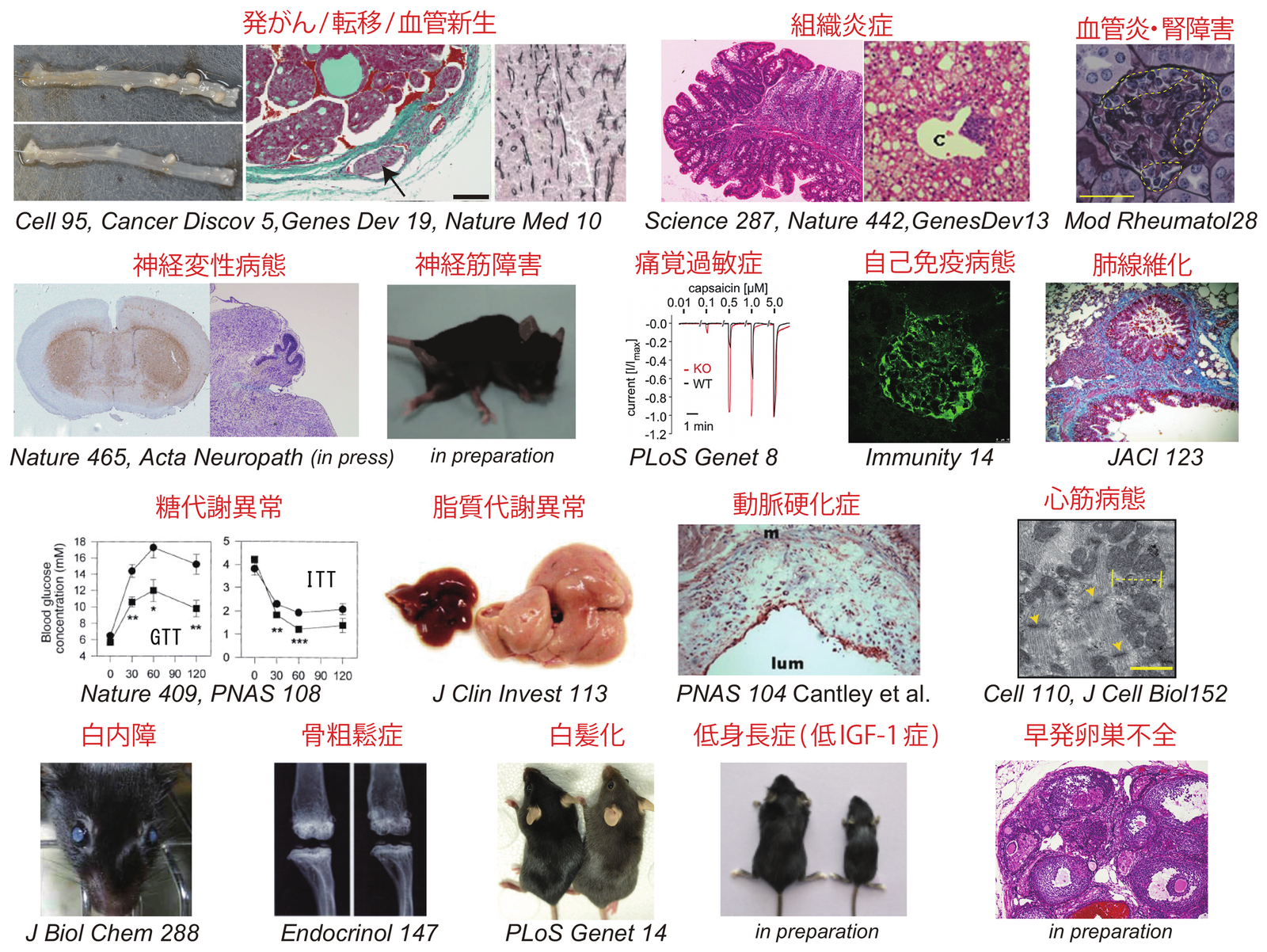
Phosphoinositides are trace phospholipids on the cell membrane, yet the breakdown of even a single one of their metabolizing enzymes can affect diverse organs and tissues throughout the body. Abnormal phosphoinositide metabolism has been reported to be involved in carcinogenesis, metastasis, and angiogenesis; tissue inflammation; vasculitis and kidney injury; neurodegenerative conditions; neuromuscular disorders; hyperalgesia; autoimmune conditions; pulmonary fibrosis; abnormal glucose and lipid metabolism; atherosclerosis; cardiac pathologies; and even age-related phenotypes such as cataract, osteoporosis, hair graying, short stature, and premature ovarian insufficiency. The figure below provides an overview of the disease pathologies arising from disrupted phosphoinositide metabolism, together with results from our laboratory and related studies (analyses of genetically modified mice).